 BECOMINGStart a project
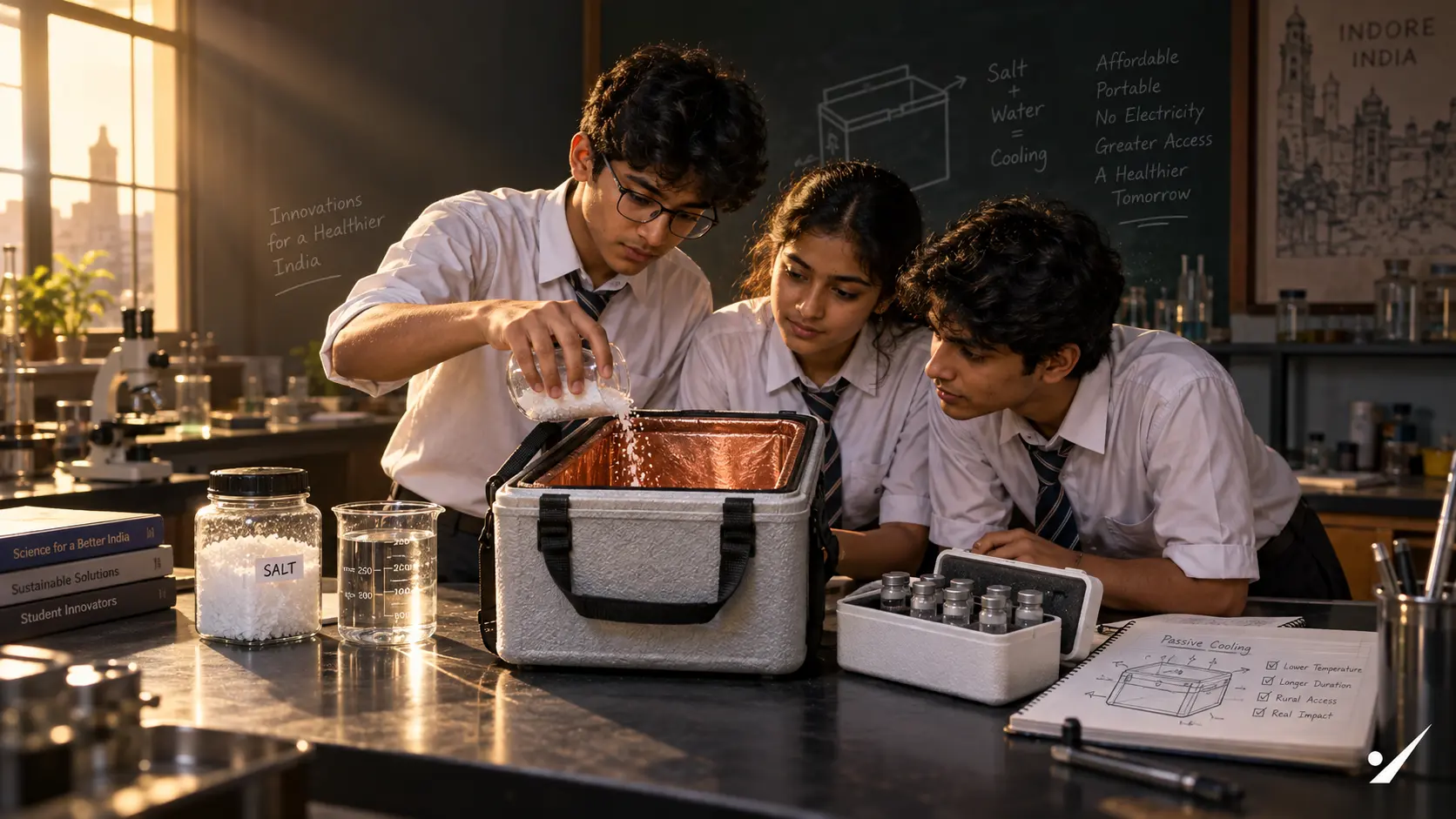
In Indore, India, Dhruv Chaudhary, Mithran Ladhania and Mridul Jain designed Thermavault—a portable prototype that uses salt and water to create cold where a power socket may be impossible to find.
The problem was not the medicine. It was the journey.
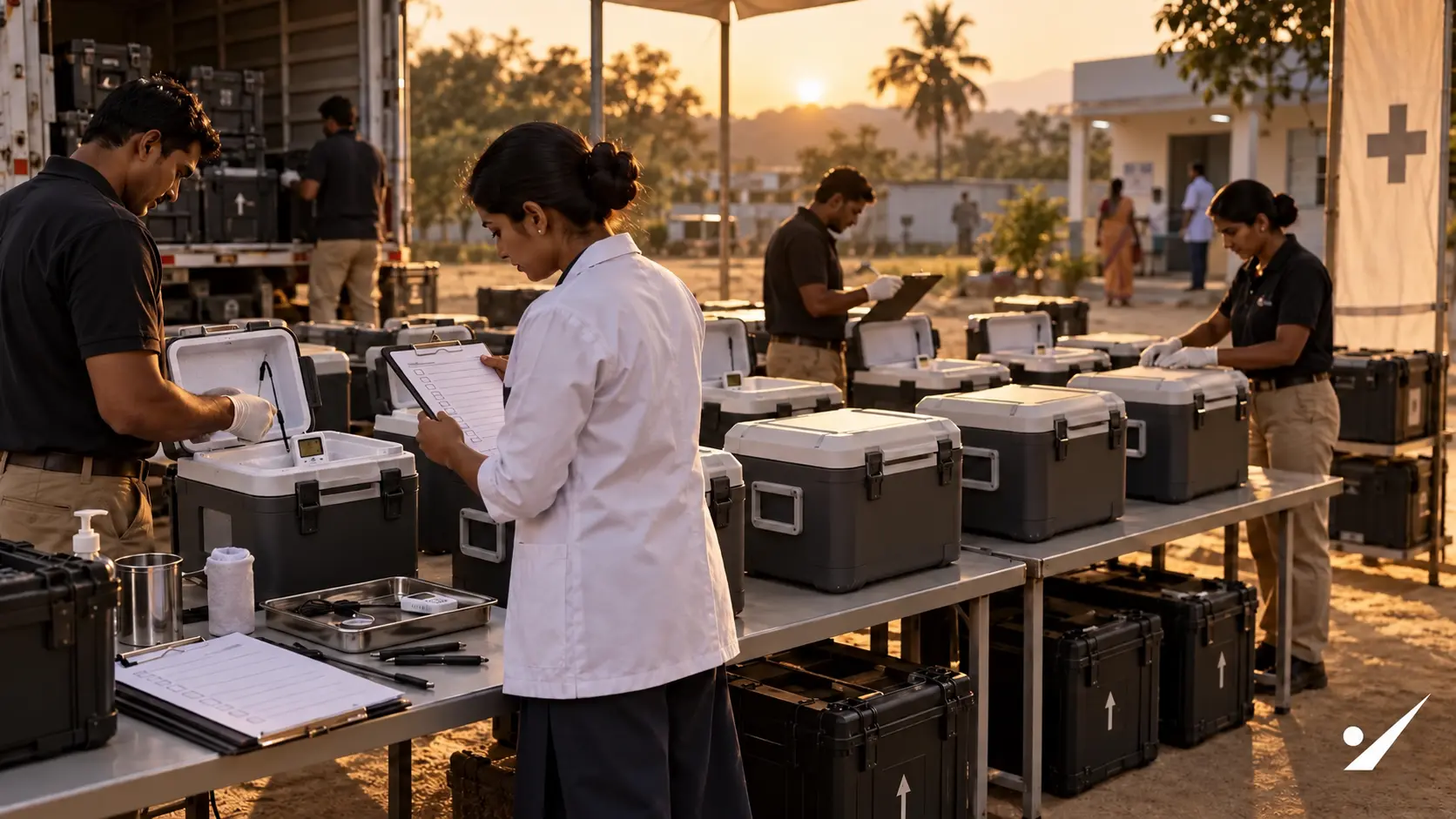
During the COVID-19 pandemic, three students in Indore watched a medical problem unfold beyond the walls of a hospital. Vaccines could exist, doctors could be ready and families could be waiting—but essential supplies still had to remain cold while traveling toward communities where electricity was unreliable or absent.
Dhruv Chaudhary, Mithran Ladhania and Mridul Jain were teenagers when they began working on a different kind of refrigerator. It would not be a kitchen appliance and it would not need a wall outlet. It would be a compact transport container designed around a difficult question: can cold be created precisely where electricity cannot?

Their answer began with salt and water
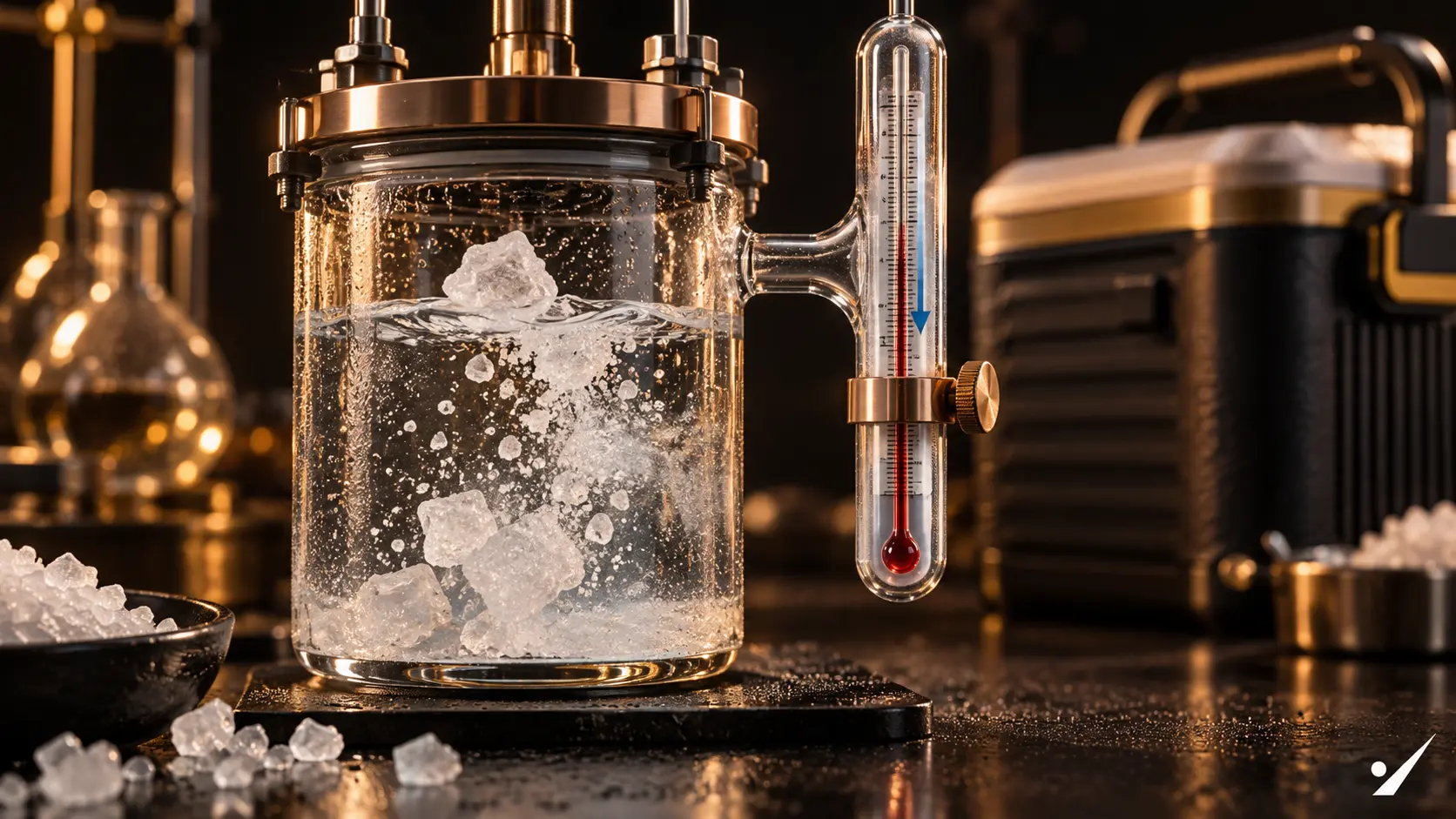
Some chemical processes absorb heat from their surroundings. In an insulated container, that endothermic effect can lower the temperature around a protected inner chamber. Thermavault applies that principle using salt-based cooling rather than a compressor, battery or conventional electrical supply.
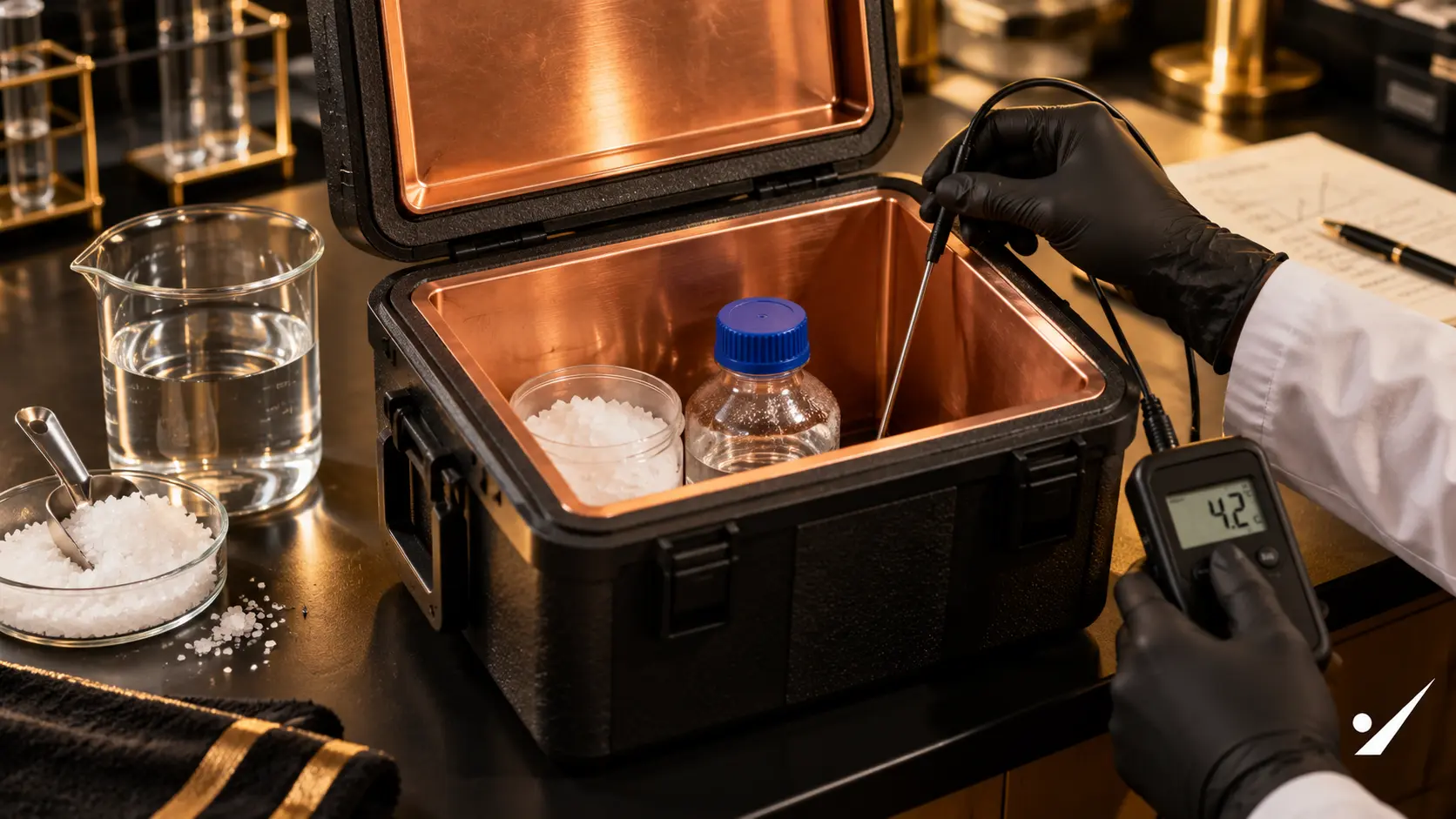
The students reportedly considered roughly 150 salts, narrowed the list to about twenty and tested candidates before reaching a workable configuration. Their prototype uses an insulated outer shell and a copper-lined interior, with the cooling reaction occurring around the compartment intended to hold medical supplies.
This is not a home experiment. Chemical handling, material compatibility, temperature control and medical transport require professional safety procedures. The importance of the project lies in the engineering system—not in encouraging untrained replication.
Failure came before the cold
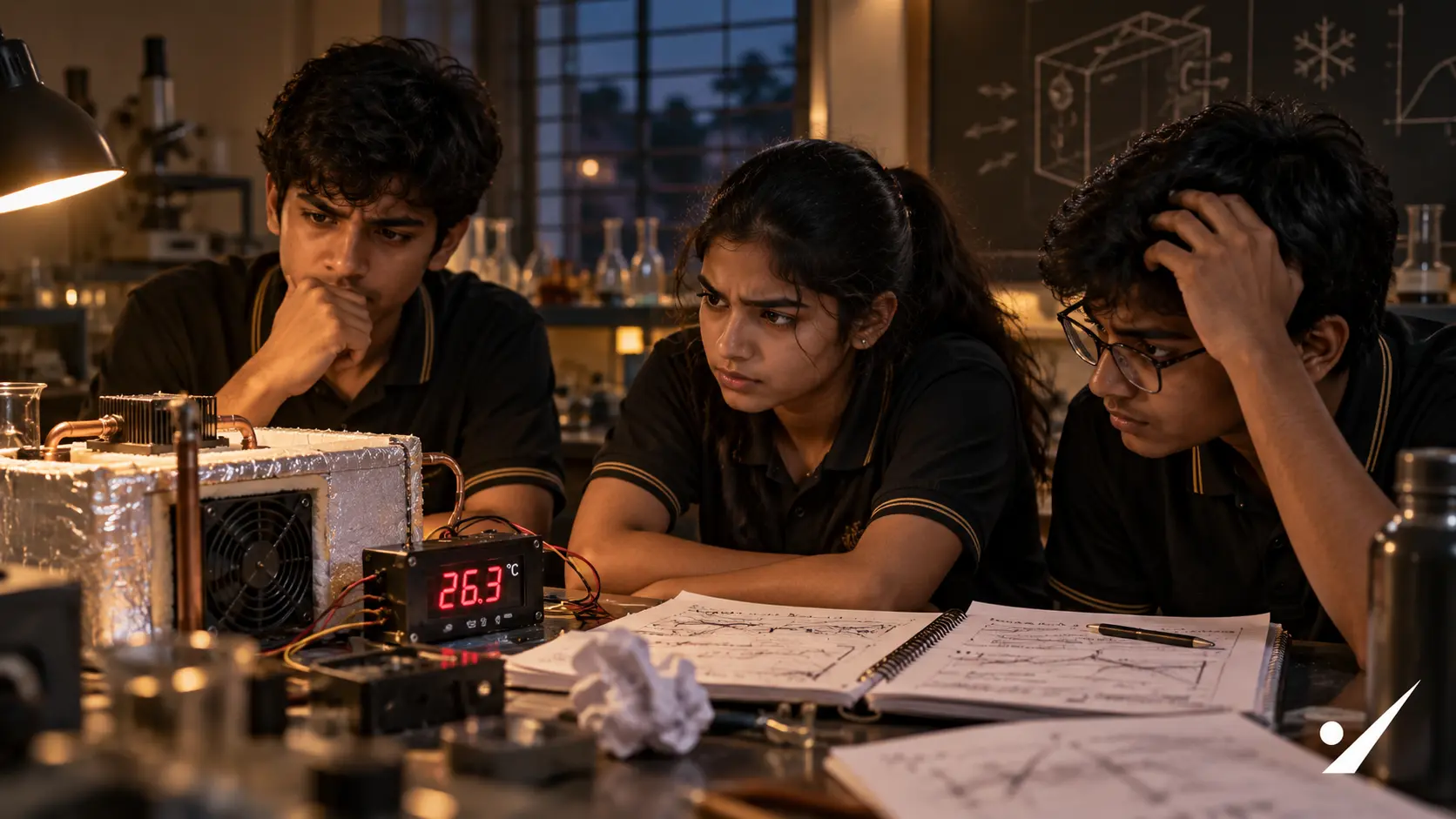
The first rounds did not immediately deliver the temperature drop the team needed. That failure is central to the story. They did not discover a magical ingredient on the first attempt; they had to compare materials, reject weak results and return to basic chemistry.
A suggestion from a teacher brought them back to concepts found in school science. The contrast is powerful: after searching through advanced possibilities, part of the path forward came from knowledge already close to them. Innovation was not a rejection of education. It was education placed under pressure by a real human need.
What the prototype has shown
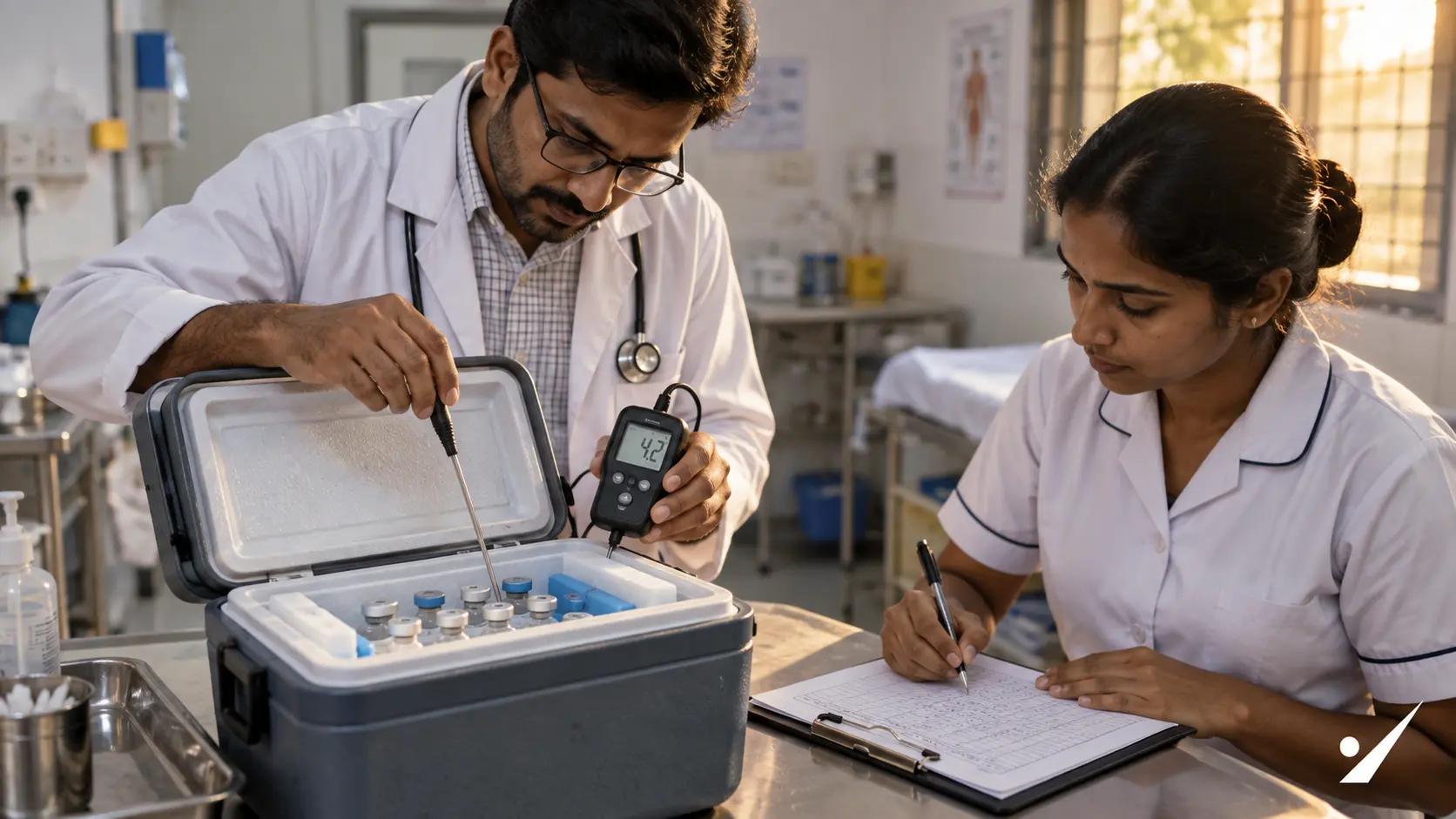
According to reporting published in 2025, a doctor at V One Hospital in Indore said the prototype had kept vaccines cold for approximately ten to twelve hours during testing. The team described temperature ranges that could be relevant to vaccine transport, depending on the salt system used.
That result is promising, but it is not the same as worldwide medical approval. A cold-chain device must hold the correct temperature consistently, record what happens inside, withstand transport and meet strict quality and safety requirements. Thermavault should therefore be understood as a serious prototype moving through validation—not as a finished replacement for every existing vaccine carrier.
Why a box without a plug could matter
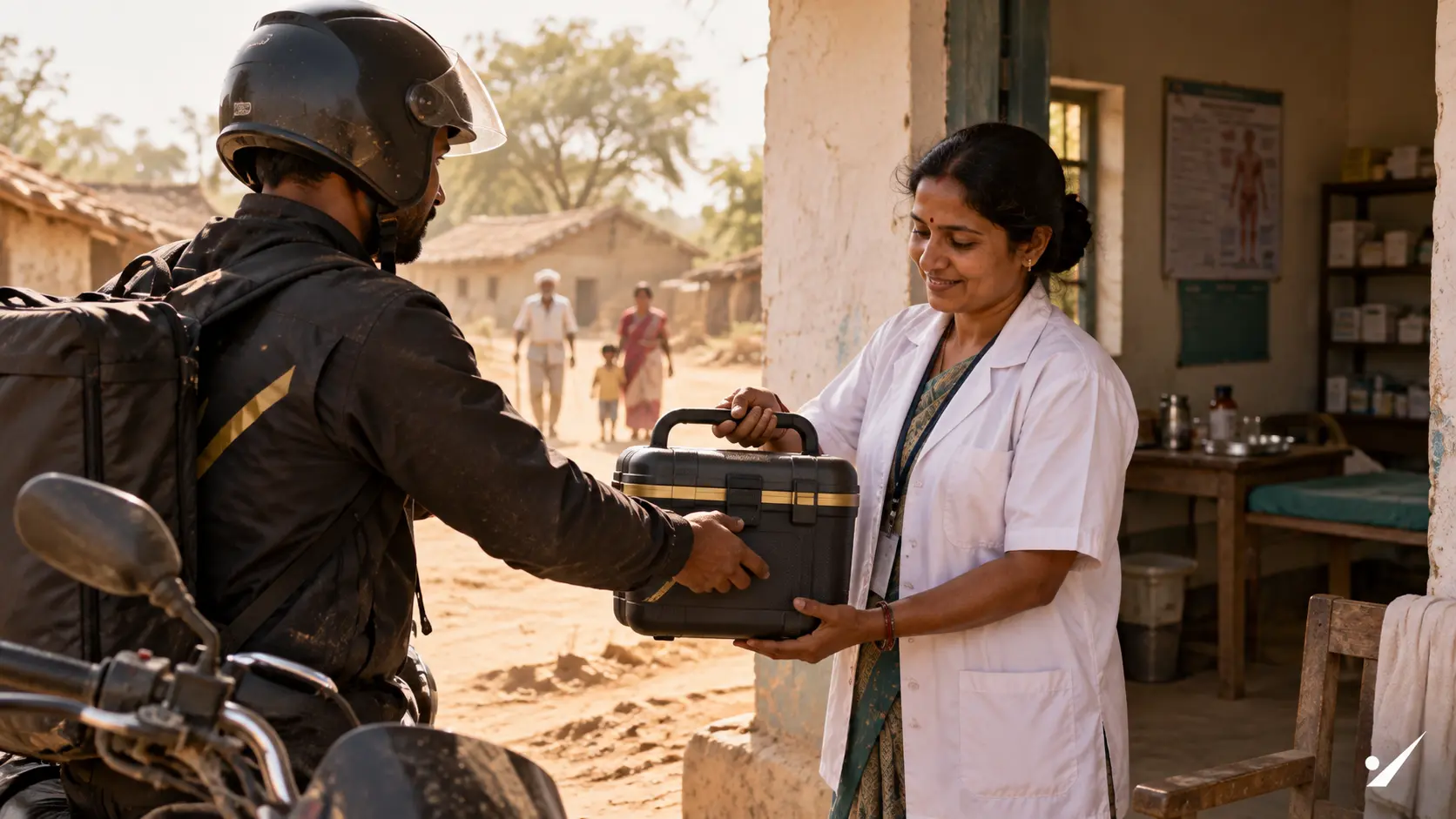
A vaccine can lose value if it is exposed to temperatures outside its required range. The last part of a journey—from a regional facility to a remote clinic—can be especially difficult when roads are long, power is unstable and conventional ice packs cannot be prepared nearby.
A reusable cooling mechanism that can operate away from the electrical grid could widen the places where temperature-sensitive supplies travel. The students have also discussed possible uses involving other medicines and transplant organs, although each use would require its own technical evidence and regulatory pathway.

From a school project to hospital trials
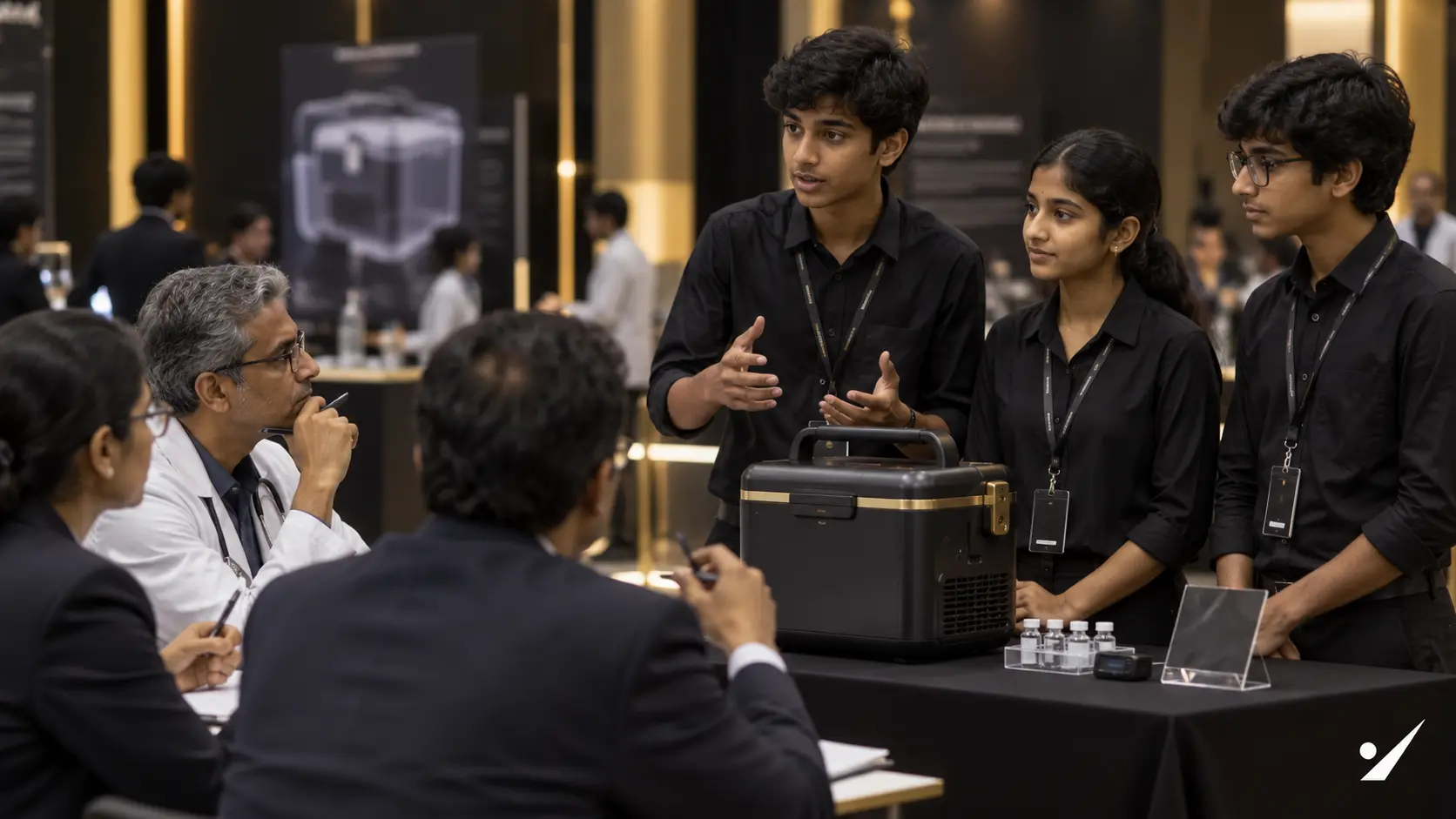
Thermavault was selected as the Asia regional winner of The Earth Prize 2025, bringing the team $12,500 to advance its work. At the time of the award coverage, the students planned to build 200 units for evaluation across 120 hospitals.
The ambition is significant because field testing can expose what a laboratory cannot: rough handling, changing weather, repeated use, cleaning requirements, training needs and the consequences of an inaccurate temperature. Those realities will determine whether the invention can move from an impressive prototype to dependable medical infrastructure.
The questions that still matter
Can every unit maintain a validated temperature range for the required duration? Can the salts be recovered and reused safely outside a laboratory? What will manufacturing, monitoring and maintenance cost? Can the design satisfy the performance, quality and safety standards expected in global vaccine supply systems?
These questions do not weaken the Spotlight. They make it honest. Becoming celebrates courage and imagination without confusing potential with proof. The next achievement for Thermavault will not be another viral headline; it will be rigorous evidence that the device works repeatedly in the conditions it was created to serve.
Three teenagers saw a missing connection
The extraordinary part of Thermavault is not only that salt can create cold. That scientific principle was already known. Their achievement was seeing a broken connection between medical progress and human access, then turning classroom chemistry into a possible bridge.
They looked at villages without dependable electricity and did not ask why those communities were too difficult to reach. They asked why the equipment had not been redesigned for the journey. That is the spirit of SPOTLIGHT BECOMING: noticing the people who refuse to accept that the future must arrive everywhere in the same way.