 BECOMINGStart a project

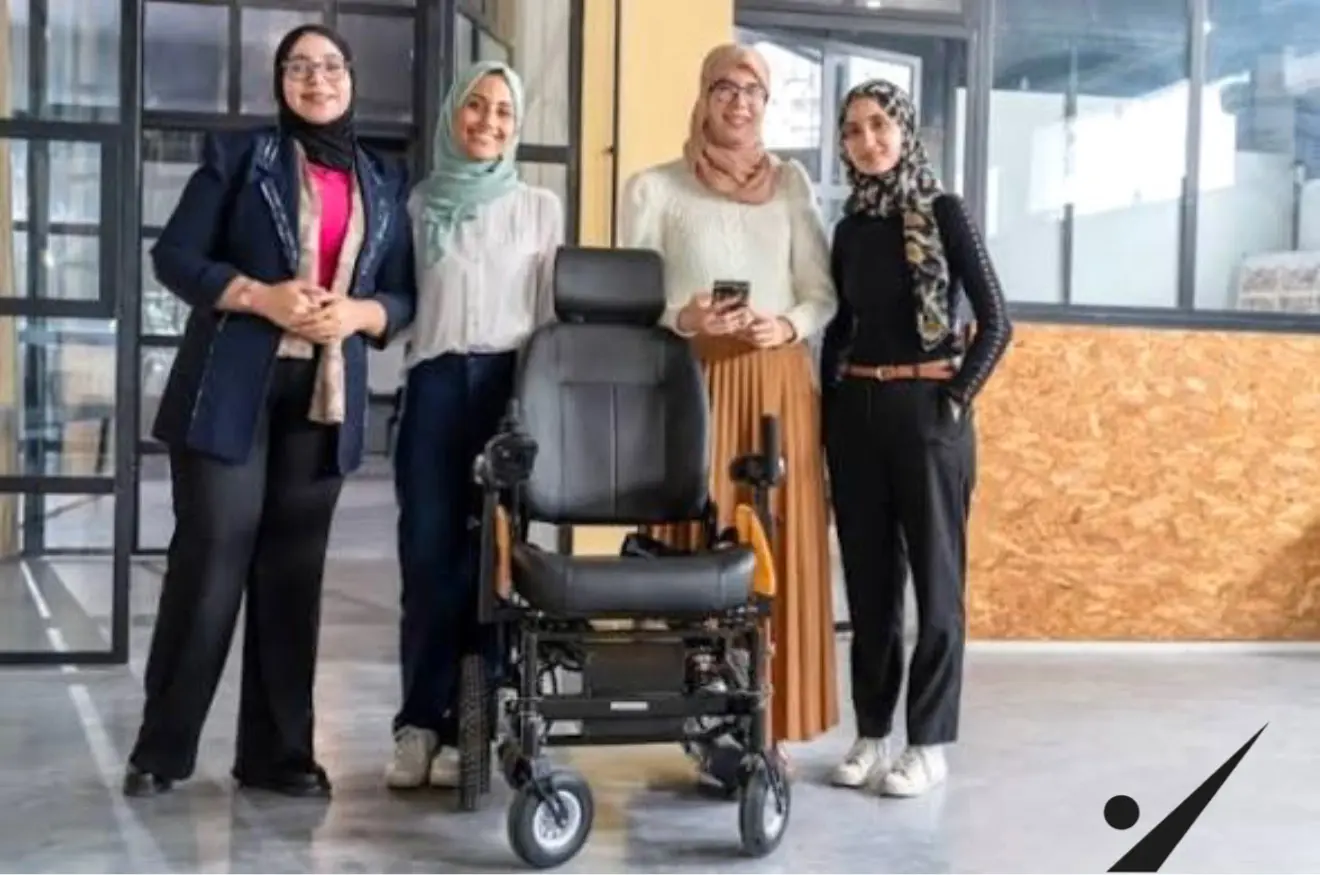
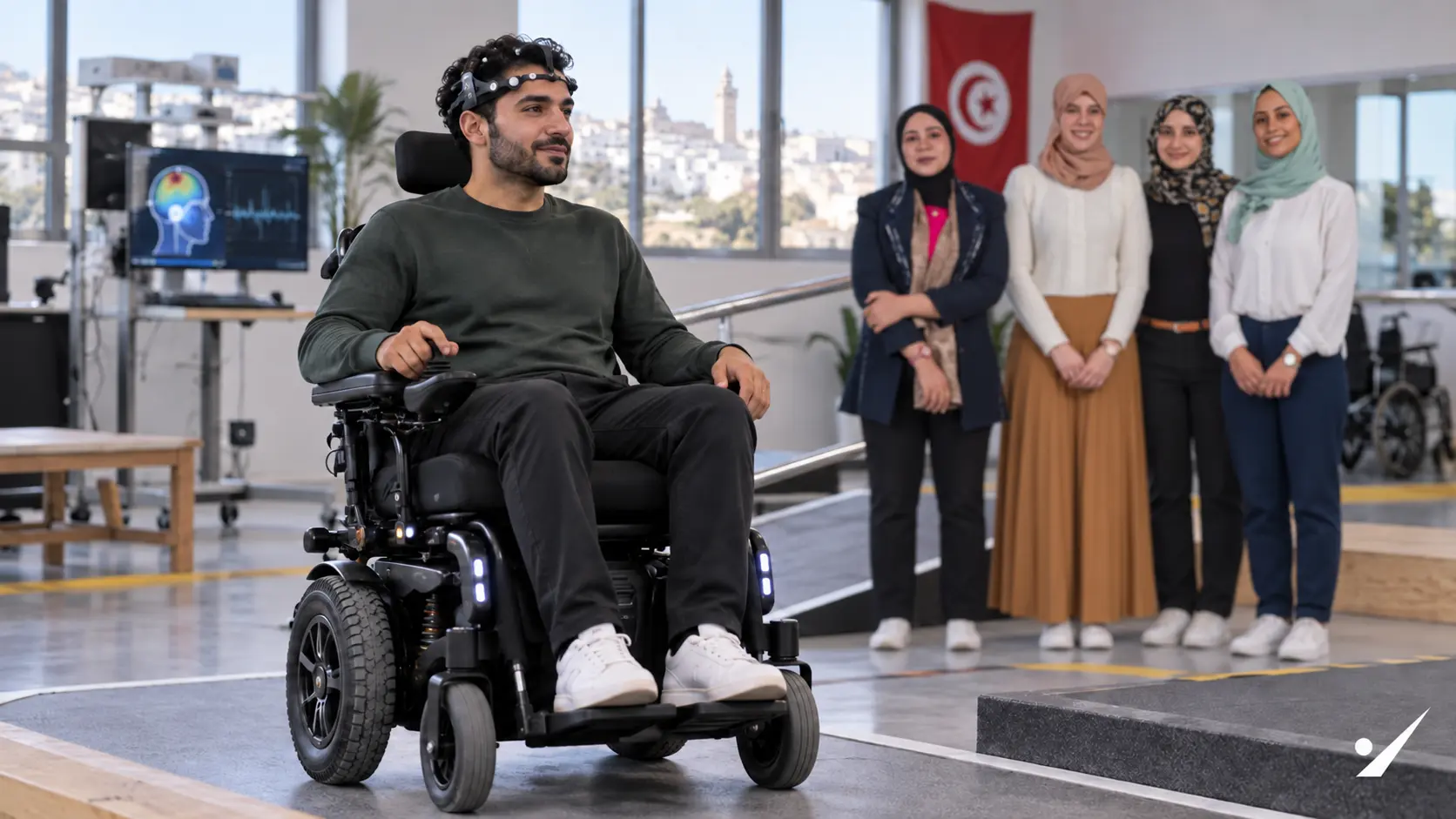
Khaoula Ben Ahmed, Ghofrane Ayari, Souleima Ben Temime and Sirine Ayari created MOOVOBRAIN—a multi-mode control system designed to give people with severe motor disabilities more independent movement.
The movement most people never have to think about
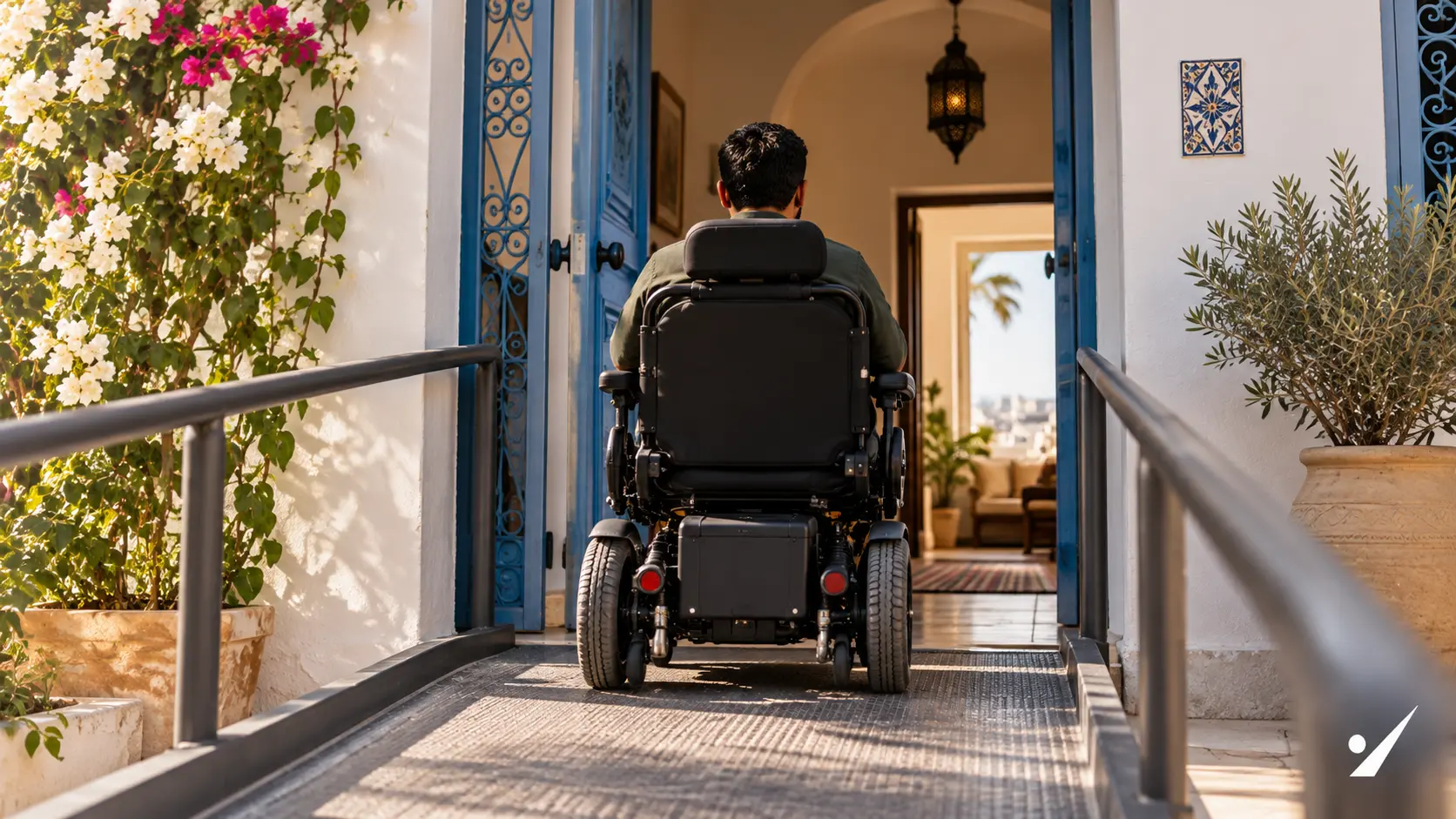
To cross a room, many wheelchair users push a joystick or wheel rim with a hand. But for people with severe upper-body paralysis, that ordinary control may be impossible. The chair exists, the destination is visible and the decision to move is present—yet the physical command cannot reach the machine.
Four biomedical engineers in Tunisia decided the wheelchair should adapt to the person, not demand that every person control it in the same way.

Four women, one urgent question
Khaoula Ben Ahmed, Ghofrane Ayari, Souleima Ben Temime and Sirine Ayari met while studying biomedical engineering at the Higher Institute of Medical Technologies in Tunis. Their project gained urgency after Souleima’s uncle suffered a severe heart attack that left him unable to move or communicate.
The team combined medical understanding, electronics and software. Within roughly a year, they had developed a prototype that would become MOOVOBRAIN. In 2019, they created the startup GEWINNER to continue the work.
A wheelchair with four ways to listen
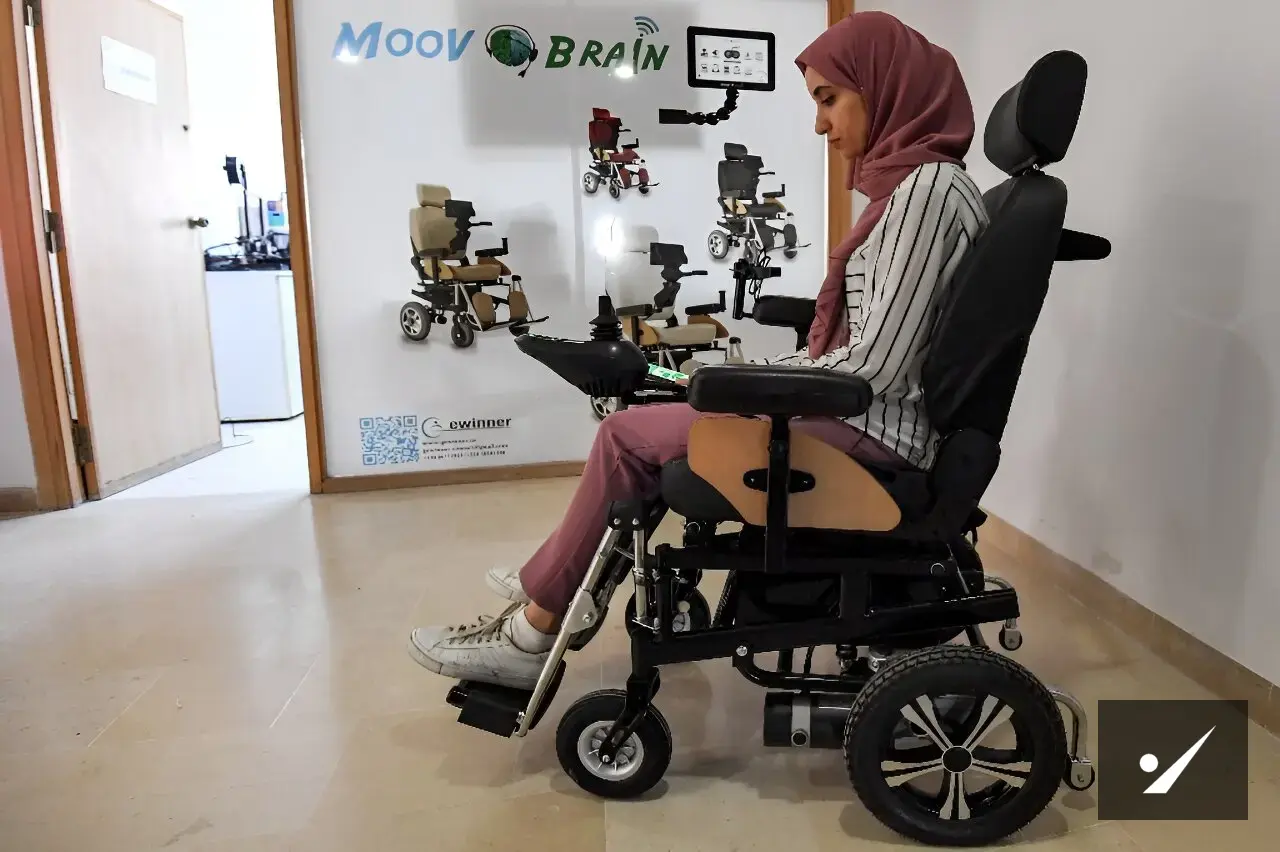
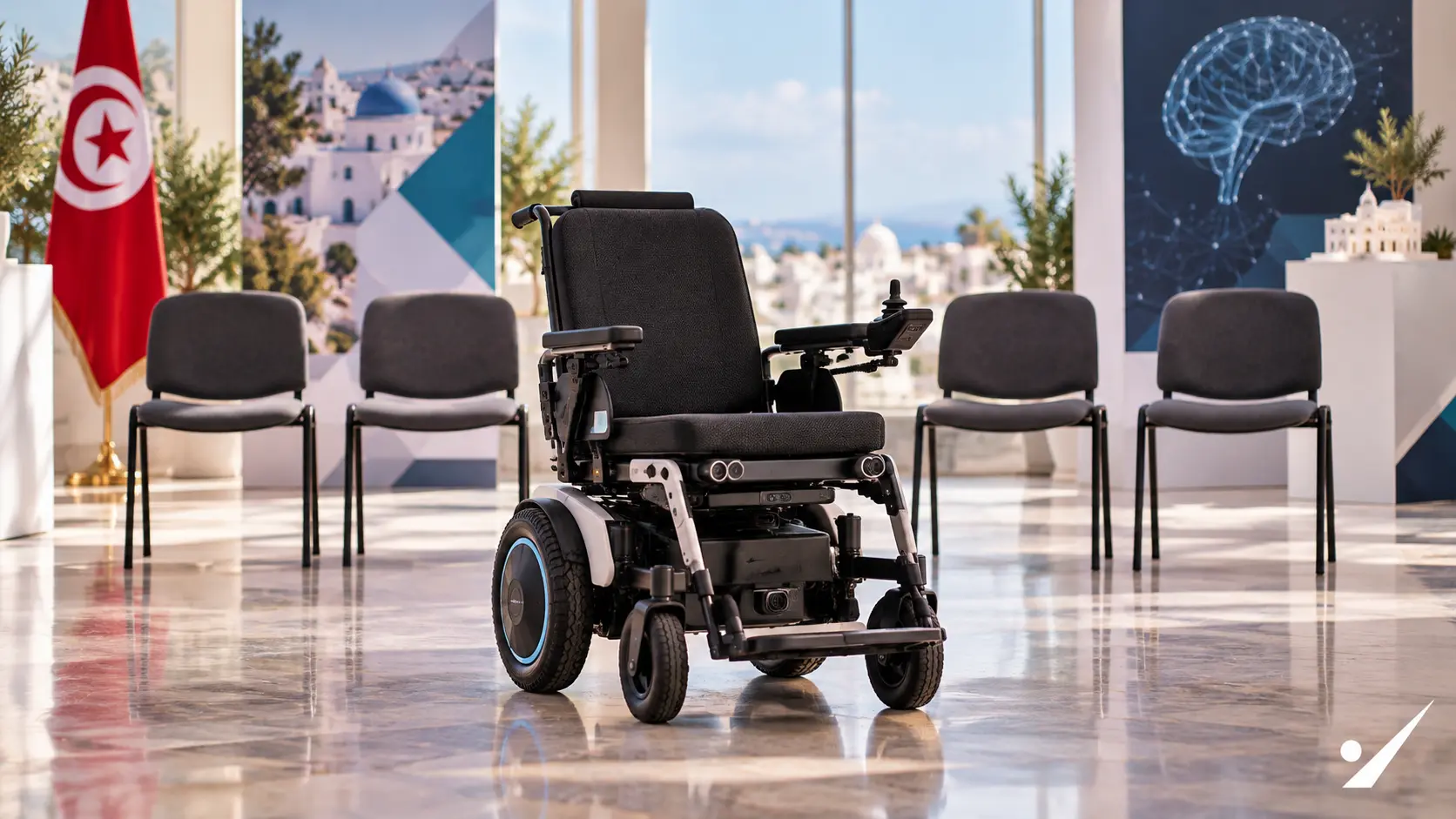
MOOVOBRAIN is not presented as one entirely new wheelchair. It is an electronic interface and mobile application designed to integrate with existing electric wheelchairs. Its central idea is choice: match the control method to the abilities a person retains.
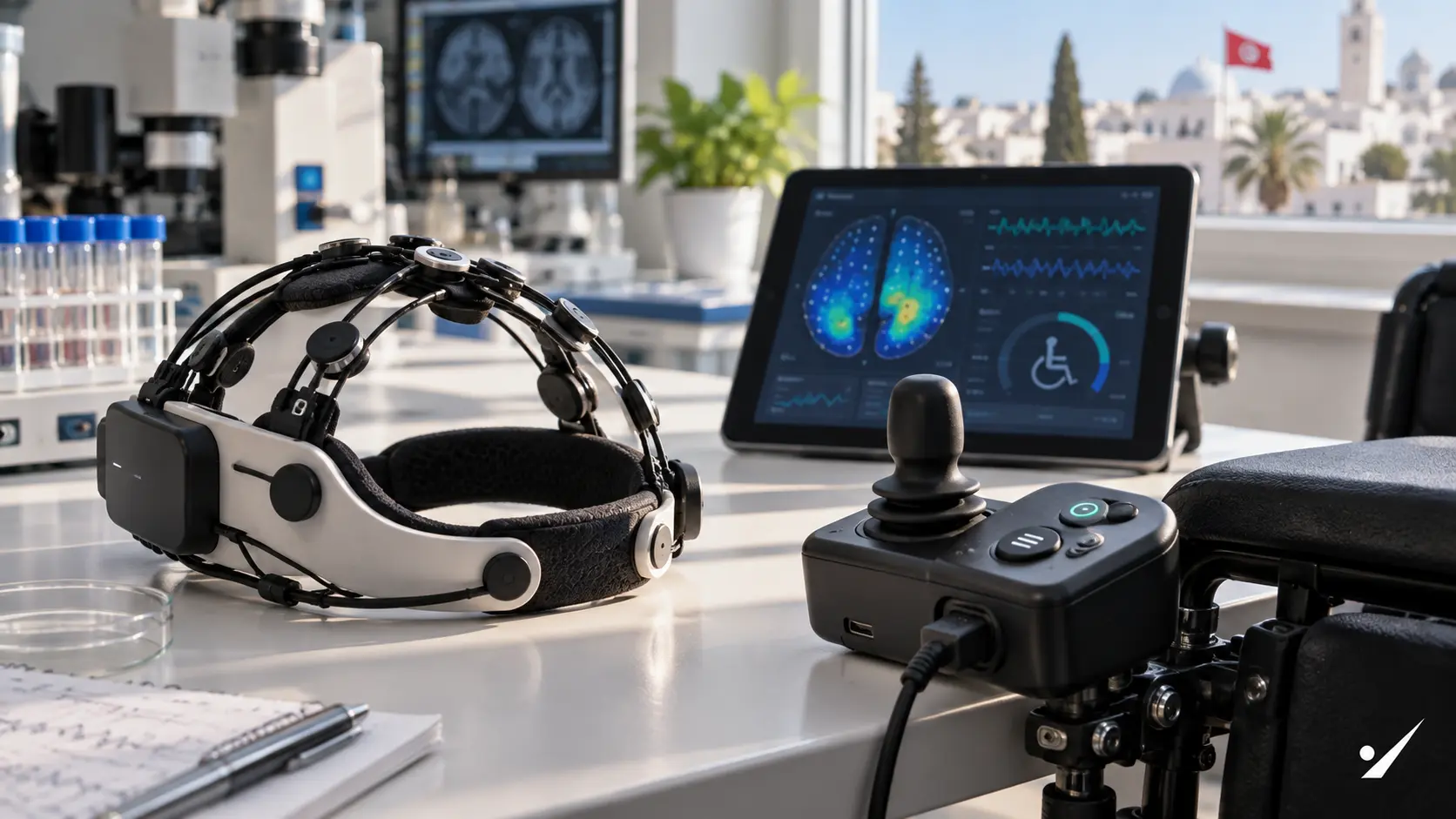
The European Patent Office describes four modes. Brain-driving mode reads electrical brain activity and eye movements through a non-invasive helmet. Grimace mode interprets selected facial expressions. Voice mode uses spoken commands. Manual mode provides control through the mobile application for people with limited muscular strength.

What ‘controlled by thought’ actually means
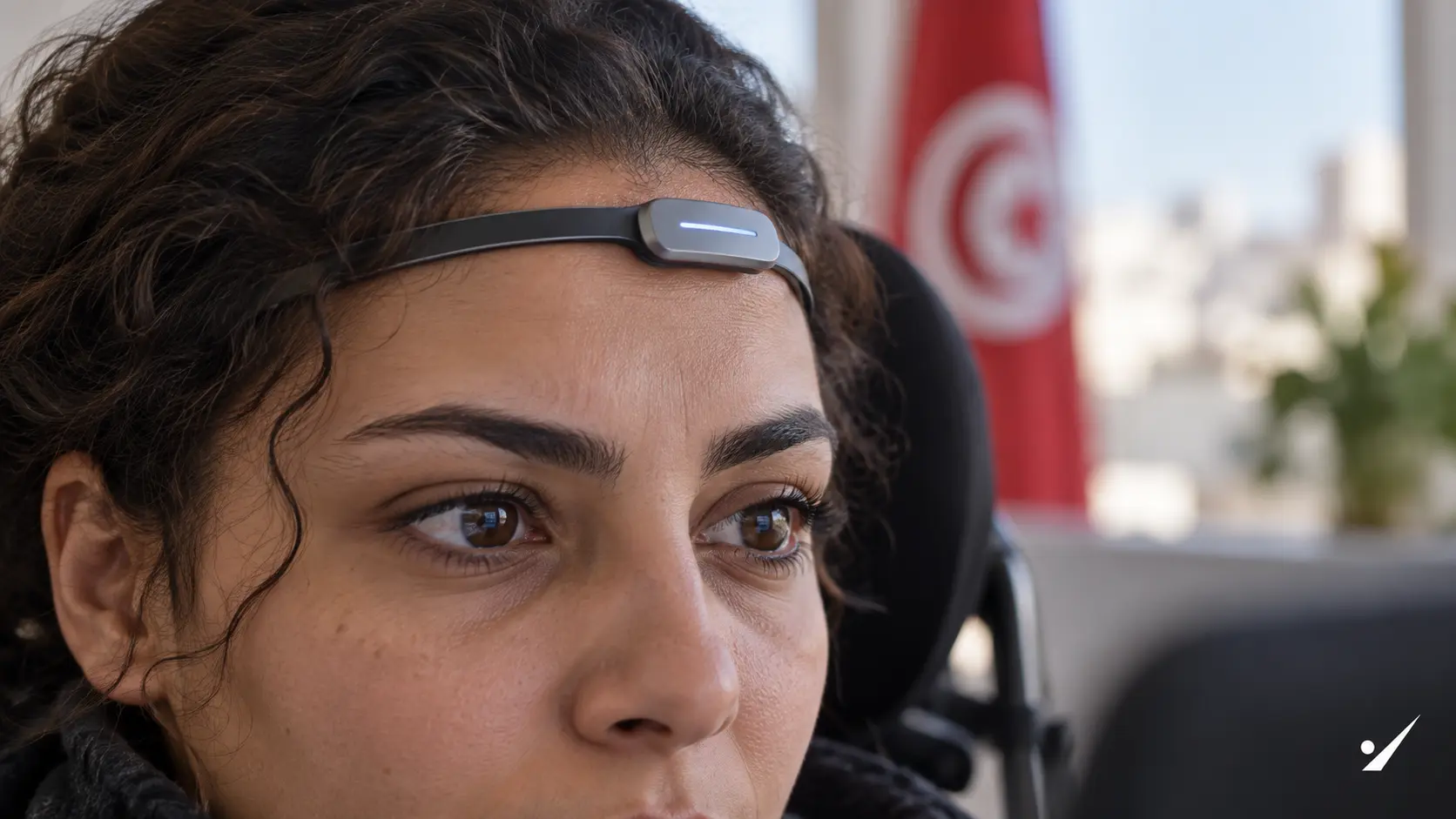
The phrase sounds almost magical, but the engineering is more precise. A non-invasive sensor records patterns of electrical activity at the scalp. Software looks for a trained, intentional signal—such as sustained focus or a deliberate blink—and translates the recognized pattern into a directional command.
The system is not reading a person’s private thoughts. It is classifying specific signals that the user has learned to produce. That distinction matters because brain-computer interfaces depend on calibration, concentration, signal quality and careful protection against accidental commands.
The eyes, face and voice become alternatives
One person may retain reliable eye movement but not speech. Another may speak clearly while having almost no controlled arm movement. Someone else may be able to produce consistent facial expressions. A single input method would exclude many of the people the invention is intended to help.
MOOVOBRAIN’s four-in-one structure aims to widen access by offering alternatives. The strongest feature is therefore not one futuristic sensor. It is the refusal to assume that disability looks the same for every user.
Independence measured in metres
For a person who relies entirely on a caregiver to reposition a chair, moving a few metres independently is not a small convenience. It can change privacy, confidence, social participation and the feeling of control over daily life.
Khaoula Ben Ahmed told the European Patent Office that a simple independent action can produce a very large emotional change. That human outcome—not the spectacle of artificial intelligence—is the reason the technology matters.
From Tunis to an international stage
The team received Tunisia’s Startup Act Label and presented its work at international technology events. In 2024, MOOVOBRAIN was selected from more than 550 candidates for the European Patent Office’s Young Inventors Prize.
Khaoula, Ghofrane, Souleima and Sirine finished third in the prize. The recognition was important: four young African and Arab women had taken a deeply personal medical problem and built a technology visible on a global stage.
The safety questions cannot be skipped
A wheelchair is not a phone cursor. A false command can cause a collision, a fall or entry into an unsafe area. Any system intended for real-world mobility must distinguish deliberate signals from ordinary blinking, conversation, fatigue, distraction and electrical noise.
Testing must examine emergency stopping, obstacle detection, latency, battery failure, different environments and the wide variation between users. Medical-device approval, manufacturing quality, training and maintenance will determine whether a prototype becomes dependable assistance.
Affordability is part of the invention
The European Patent Office says competing advanced control products can cost more than €6,500 and describes GEWINNER’s approach as more affordable. A lower-cost interface that works with existing electric wheelchairs could reduce the need to replace an entire mobility system.
But affordability must ultimately be demonstrated through a real selling price, availability, servicing and compatibility. A device is not accessible merely because it costs less in theory; it must reach users, survive daily life and be repairable where they live.
The Becoming view: technology that moves toward the person
The extraordinary achievement is not that four engineers taught a chair to move. Electric wheelchairs already move. They taught a control system to listen in several different ways—to the brain, the eyes, the face, the voice and the touch a person can still use.
MOOVOBRAIN asks a larger question: when a human being cannot adapt to a machine, why should the machine remain unchanged? These four Tunisian women began with one family’s sudden loss of mobility and built an answer intended for millions. That is becoming: turning empathy into engineering, and engineering into the possibility of independence.